
In the era of exponential data center expansion, the physical interconnect between compute nodes has evolved from a supporting component to a critical bottleneck. It now dictates the throughput, scalability, and ultimate performance ceiling of AI clusters. Whether deploying hundreds of thousands of GPUs for massive AI workloads—like the xAI Colossus—or managing distributed architectures with millions of processors, the challenge remains identical: every device relies on high-performance physical cabling for low-latency, high-reliability data exchange.
This rigid demand has birthed a multi-billion dollar high-speed interconnect industry. At its heart lies Active Electrical Cables (AECs), a sector where pioneers like Credo Technology Group have established a dominant technical moat.
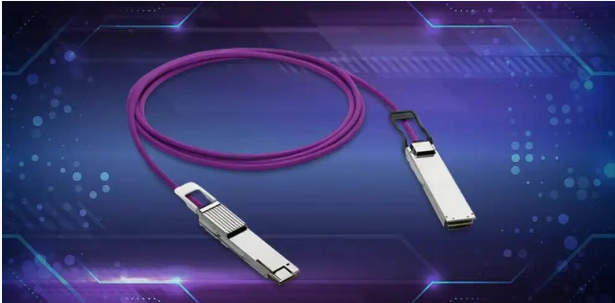
As of September 2025, Credo’s stock surged nearly 500% year-over-year. This explosive market response validates the strategic elevation of AECs in next-generation compute infrastructure. These specialized cables are now the standard for world-class projects, with Credo’s signature purple AECs becoming a visual hallmark of high-end AI clusters. To understand why AECs command such immense market value, we must examine the physical limitations of traditional copper and how AECs leverage chip-level innovation to redefine the boundaries of short-reach interconnects.
The Physical Constraints of Passive Copper
While passive copper cables offer advantages in cost, latency, and power consumption, their fundamental physical properties impose strict limits on high-frequency transmission. Copper is not a perfect conductor; electrons collide with the crystal lattice, dissipating energy as heat (resistive loss). At high frequencies, this loss is exacerbated by the Skin Effect.
The skin effect causes high-frequency alternating current to concentrate at the surface of a conductor, drastically reducing the effective cross-sectional area and increasing resistance. The skin depth, where current density drops to 1/e of its surface value, is defined as:
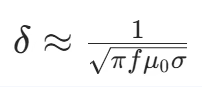
Where f is frequency, u0 is permeability, and sigma is the conductivity of copper ( 5.96×10⁷ S/m).
Typical Skin Depth at Key Frequencies:
- 50/60 Hz: ~9.0 mm (uniform distribution)
- 1 GHz: ~2.1 um
- 25 GHz (High-speed standard): ~0.42um
- 50 GHz: only 0.30 um
As frequencies rise, current is squeezed into an ultra-thin surface layer, causing resistance to increase relative to F. While engineers attempt to mitigate this using thicker gauges or silver plating, attenuation inevitably approaches physical limits at tens of GHz. This is why copper must eventually yield to or be augmented by active components.
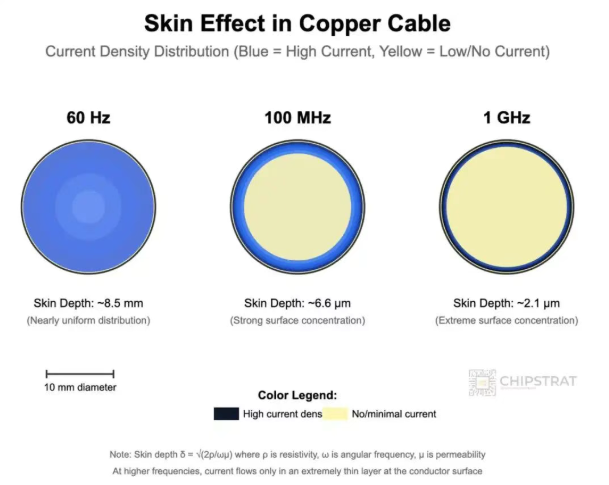
Figure 1: Current density distribution at 60Hz vs 1GHz, illustrating how the skin effect constricts current to the surface at higher frequencies.
Furthermore, passive twinaxial cables suffer from impedance mismatch, leading to signal reflections. These reflections interfere with forward-propagating signals, closing the “signal eye” and making data recovery nearly impossible at higher speeds. When combined with crosstalk (interference between adjacent pairs) and dispersion (edge blurring), the trade-off between cable length and transmission speed becomes a zero-sum game.
The “Over-Designed” Gap: Where Fiber is Too Much
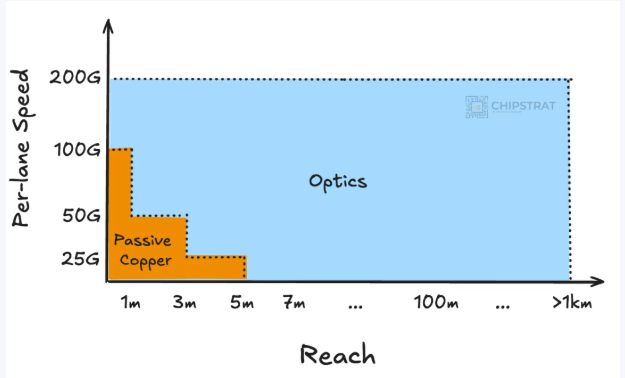
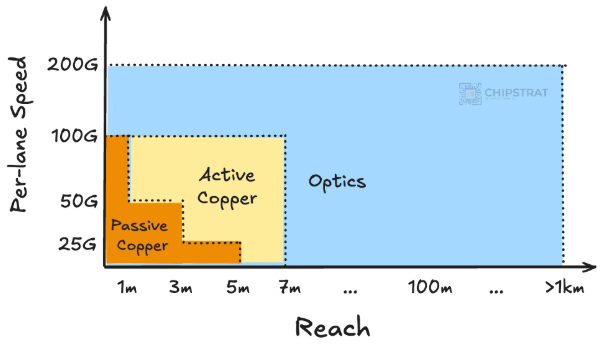
Passive copper has a hard “physical ceiling.” At 100Gbps per lane, it is limited to roughly 1 meter. At 3 meters, the rate drops to 50Gbps. Beyond these boundaries, signal integrity collapses.
Conversely, optical solutions (like Active Optical Cables, AOCs) offer incredible reach, spanning from meters to kilometers. However, this creates a “technical paradox” in AI clusters. For a liquid-cooled GPU rack requiring a 3-meter, 100Gbps-per-lane interconnect, passive copper fails, but full optical transmission is “over-designed.” The power overhead and cost of E-O (Electrical-to-Optical) conversion and laser drivers are unnecessary for such short distances.
This mismatch is the “Over-Design Zone”—a gap where passive copper is insufficient, and optical modules are too costly and power-hungry. If copper could slightly extend its reach and speed, it would be the ideal “Goldilocks” solution.
Enter AECs: A Signal Processing Revolution
The breakthrough of Active Electrical Cables (AECs) lies in applying Digital Signal Processing (DSP) to overcome copper’s physical limitations. By modeling the degradation effects of the cable, we can pre-compensate the signal at the transmitter and post-correct it at the receiver.
- At the Transmitter: AECs boost high-frequency components that suffer the most attenuation, ensuring they reach the receiver with adequate amplitude.
- At the Receiver: Sophisticated equalization algorithms, such as Decision Feedback Equalization (DFE), subtract Inter-Symbol Interference (ISI), effectively “cleaning” the signal.
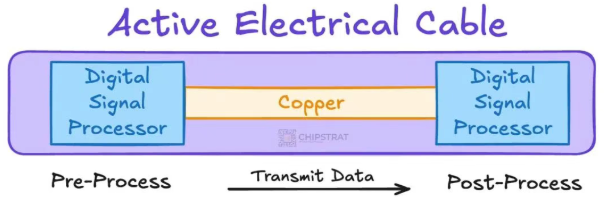
Figure 4: The AEC concept: DSPs at both ends of the copper medium perform pre- and post-processing to neutralize signal degradation.
This explains why AEC connectors are noticeably larger than passive ones; they house integrated circuits that perform real-time signal conditioning. This “active” intelligence allows AECs to push copper performance into territories previously reserved for optical fiber.
Beyond Performance: The Mechanical Advantage
Even where passive copper could work, AECs offer superior operational benefits. To maintain signal integrity without active processing, passive cables must use thick, heavy conductors, making them as rigid as garden hoses. In high-density racks, these “thick trunks” block airflow and complicate thermal management—a death sentence for high-performance liquid-cooled systems.
AECs, by contrast, use much thinner copper conductors because the onboard chips handle the “heavy lifting” of signal recovery. This allows for:
- Up to 75% volume reduction compared to passive DACs.
- Superior flexibility, enabling tighter bends and cleaner cable management.
- Enhanced airflow, which is critical for maintaining the thermal efficiency of AI clusters.
Conclusion
By combining the reach and speed of active processing with the inherent low cost and reliability of copper, AECs have hit the “sweet spot” for data center interconnects. As AI infrastructure trends toward higher density and performance, the role of active cabling—whether electrical (AEC) or optical (AOC)—will only become more pivotal in bridging the gap between raw silicon power and real-world cluster throughput.
